Krista Hoffman, owner of Hoffman Hardware, wasn’t struggling with marketing ideas.
She knew her audience — interior designers — was already on Pinterest. She knew the platform should be a strong visibility driver for her brand. But actually turning that into a working strategy? That was another story.
Between ad setup, campaign structure, and a platform that felt like it had its own language, Pinterest quickly became something she didn’t have the time or desire to keep figuring out alone.
So instead of continuing to guess, she made a shift and brought in Julia Renee Consulting 🙋♀️

Why Pinterest wasn’t driving traffic (yet)
This is where a lot of businesses get stuck. They assume Pinterest is about posting more content or being more consistent. But most of the time, that’s not the real issue.
Pinterest is a search engine. This means if your account isn’t set up in a way that supports search, your content isn’t going to get seen, no matter how good it is.
That’s where Krista was starting from. She didn’t have a bad account — it just wasn’t optimized for how Pinterest actually works.
The strategy behind the growth
We started with a full Pinterest setup in April 2025, then moved into ongoing Pinterest management a few months later. Instead of focusing on quick wins, we focused on building a strategy that could drive consistent Pinterest traffic over time.
That meant:
- Structuring her Pinterest account that the search engine could understand and categorize her content
- Aligning her pins with how interior designers search and save on the platform
- Creating consistency so the account could build momentum
Pinterest marketing works differently than social media. It’s less about posting in real time and more about creating content that continues to show up in search weeks and months later.

Seeing results in just six months
For the first few months of our work together, growth was steady but subtle, which is normal. Pinterest needs time to understand your content before it starts distributing it more widely.
Around the six month mark, things started to shift. Her content began reaching more people. Engagement increased. And most importantly, Pinterest started driving more consistent traffic to her website.
One viral pin didn’t make that difference. It was the whole strategy finally working the way it should.
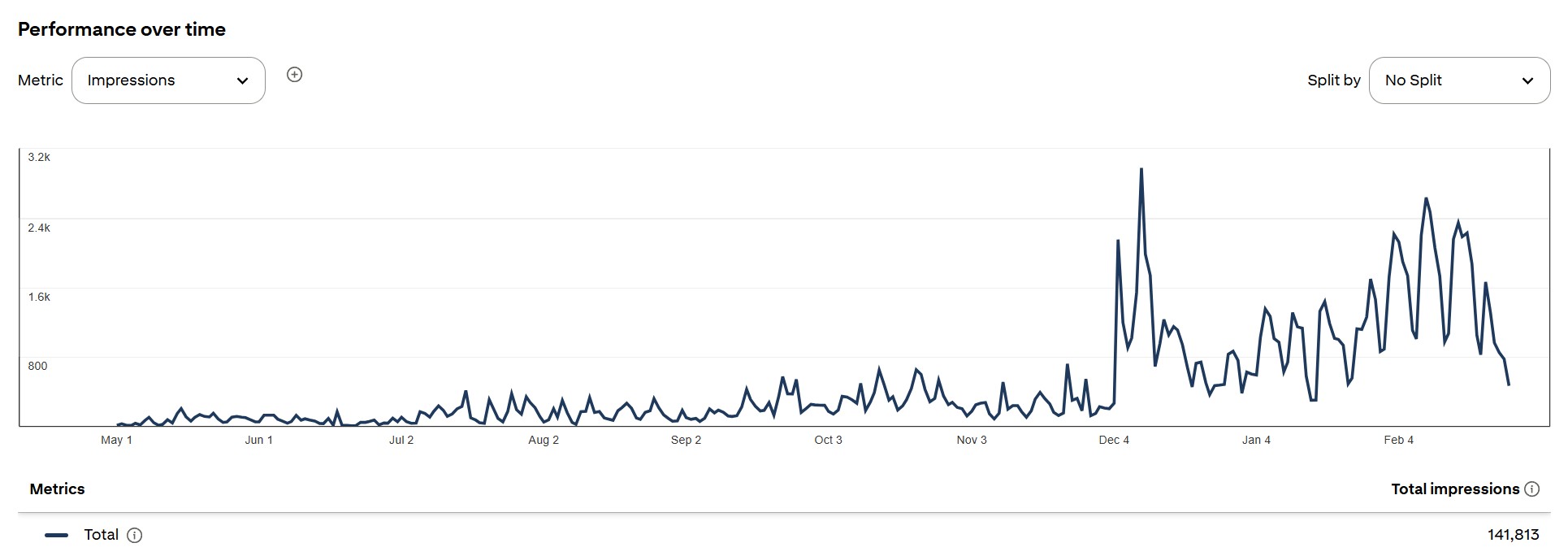
Our results with Pinterest marketing so far
About ten months into her engagement with Pinterest management, Krista’s account reached around 33,000 monthly impressions, 255 saves, and 100 outbound clicks per month. But the numbers only tell part of the story for this Pinterest case study.
What mattered more was the pattern. Traffic to her website didn’t just spike once. It started to climb steadily. Month over month, more people were finding her products, clicking through, and spending time on her site.
Her content was being saved, which is a big signal on Pinterest. Saves mean people are planning to come back, reference, or use something later. For a product like hardware, that matters. Interior designers are often sourcing for future projects, not buying on the spot.
So even though those visits haven’t turned into immediate orders yet, the behavior behind them is exactly what you want to see.
The right potential customers are finding Hoffman Hardware. They’re engaging with her content. They’re keeping her brand in mind during their planning process.
That’s what drives long-term business growth and visibility!

Why this Pinterest strategy worked
One of the biggest advantages in this project was audience alignment.
Krista’s ideal clients are interior designers, and that’s a group I already work with regularly. So instead of testing random strategies, we built her Pinterest marketing around how those clients actually use the platform. This led to more relevant content, better targeting, and stronger long-term traction.
Krista also mentioned how much she appreciated the efficiency of the process.
“As a working mom myself, I appreciate the efficiency of working mothers. I knew Julia would be the best for the role.”
That kind of clarity and trust makes it easier to focus on what actually drives results.

What this means for your Pinterest marketing
If you’re using Pinterest for your business but not seeing traffic or growth, it doesn’t necessarily mean Pinterest isn’t working. It usually means the strategy isn’t fully there yet.
When Pinterest is set up correctly, it becomes a long-term traffic source, not just something you post on occasionally. For product-based businesses, that kind of visibility can make a huge difference over time.
If your Pinterest account isn’t bringing in traffic yet, you don’t have to figure it out on your own. Reach out today, and let’s make Pinterest a growth channel for your business with my Pinterest services!